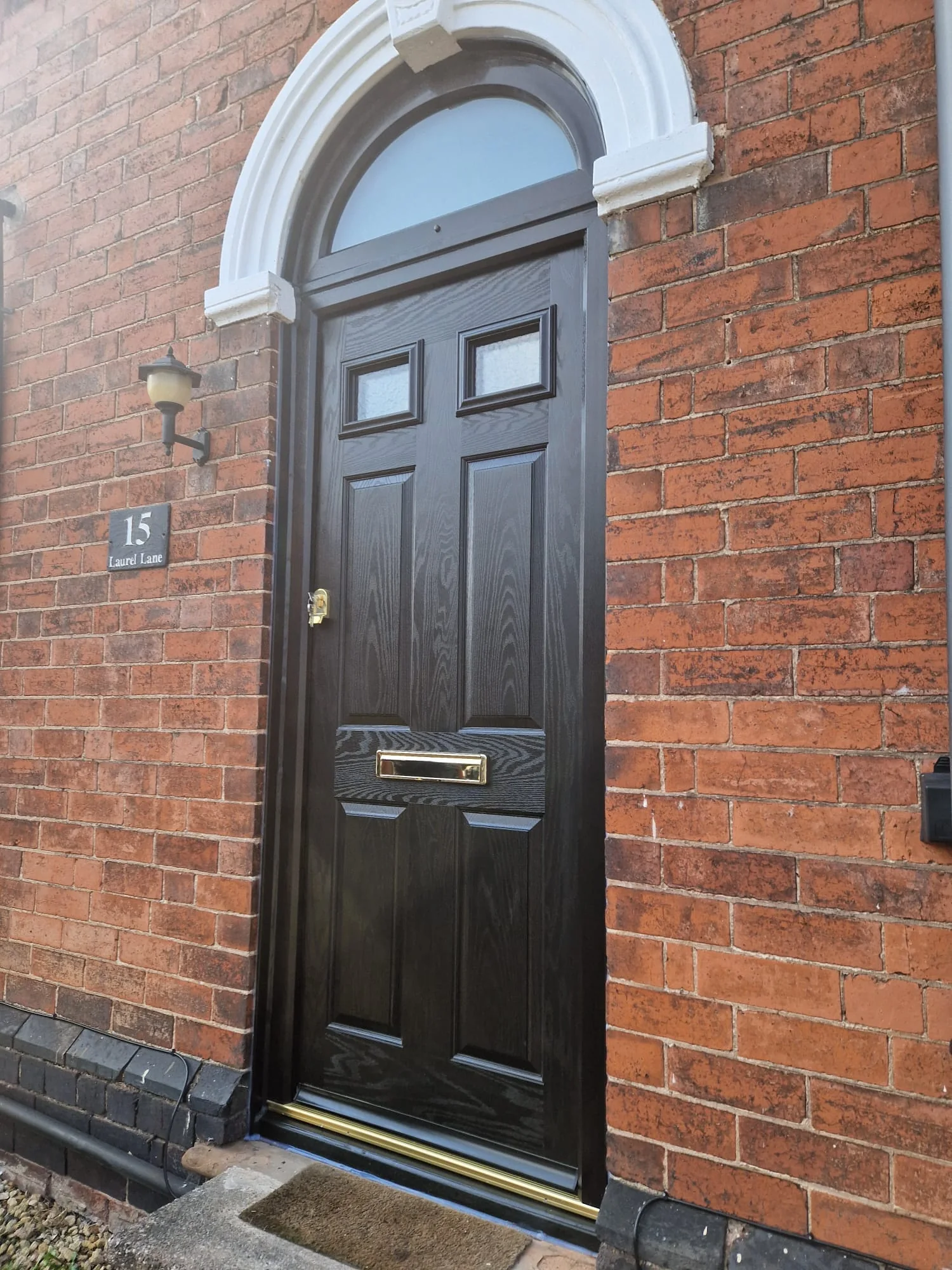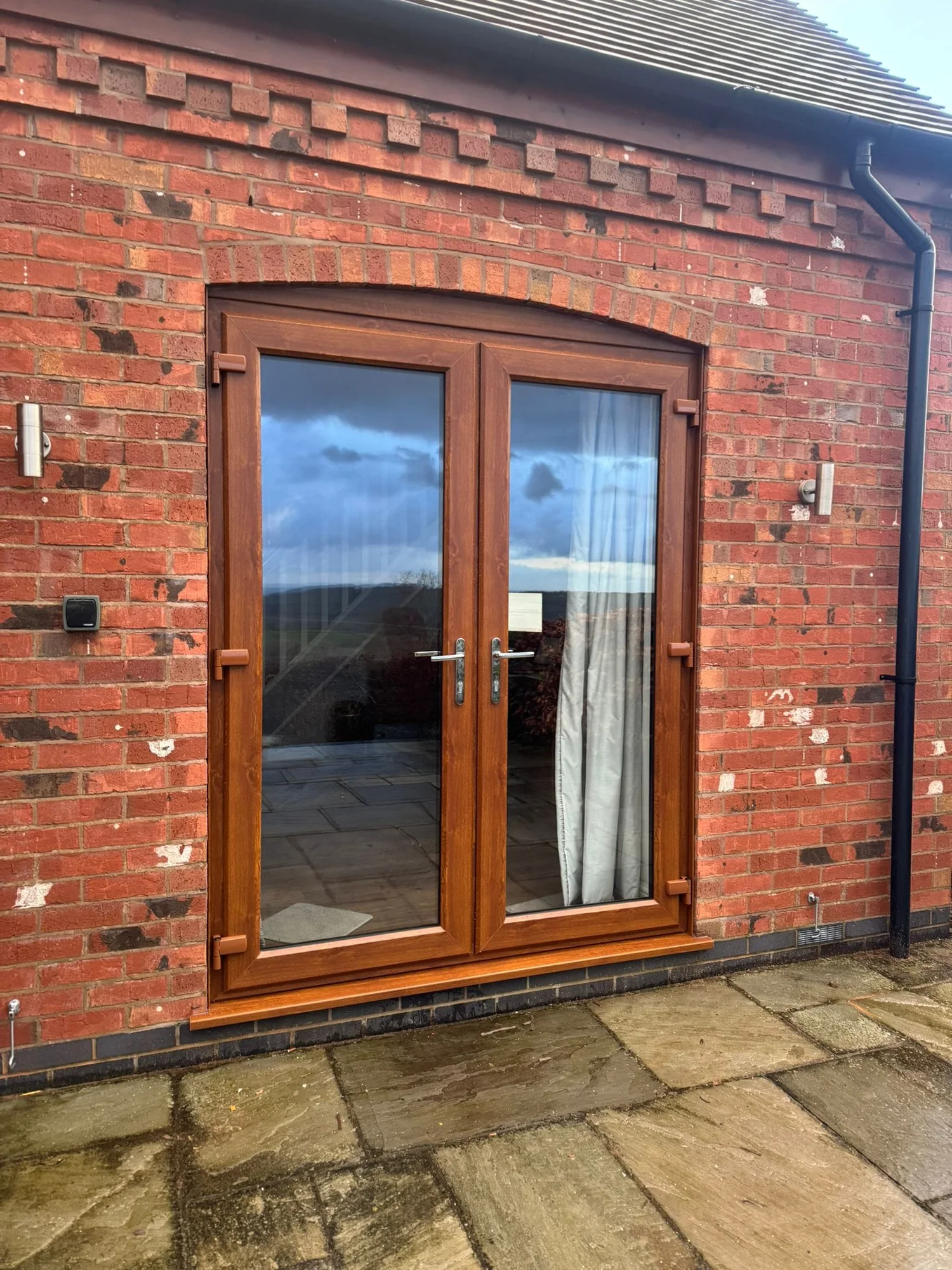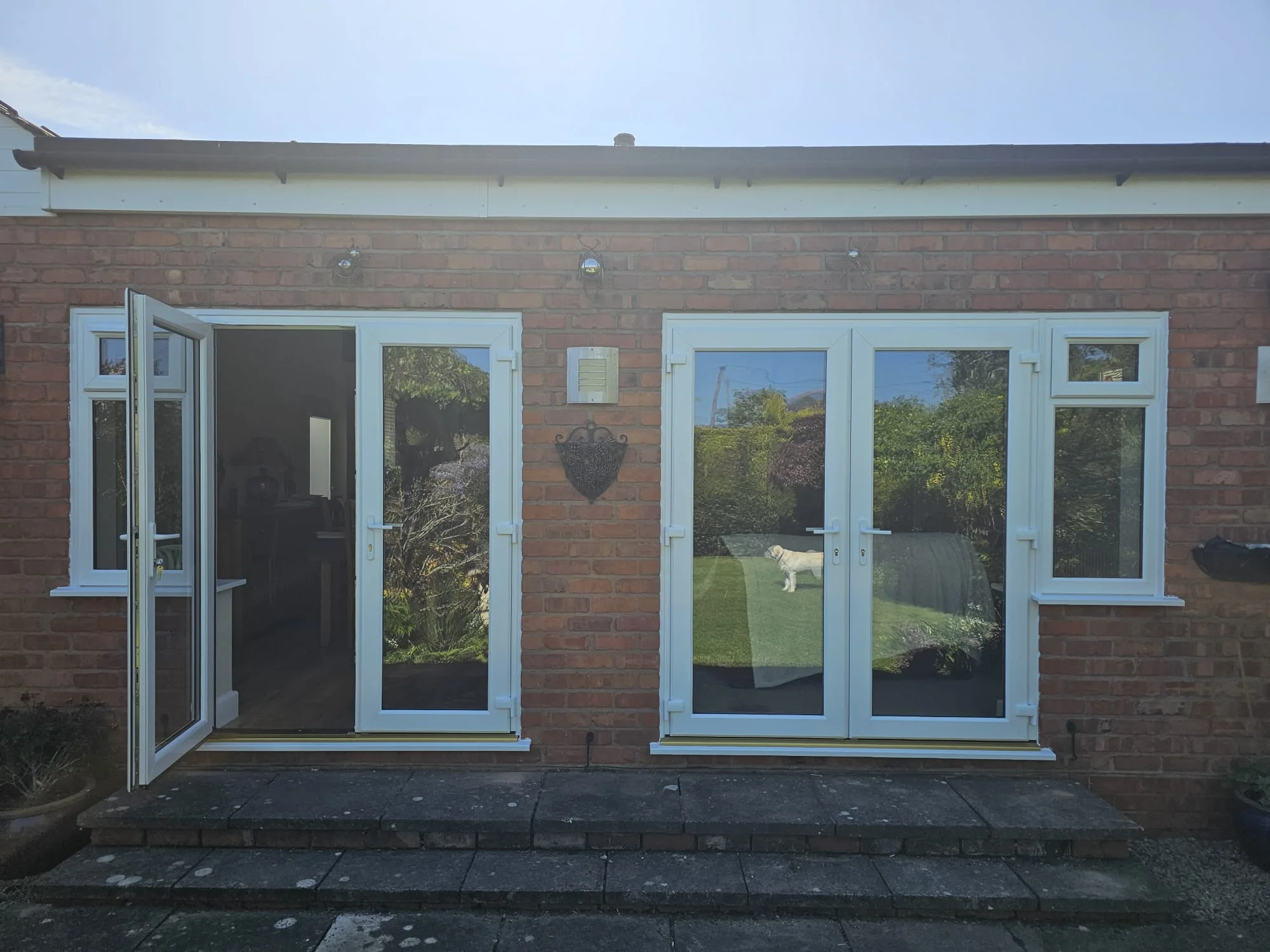
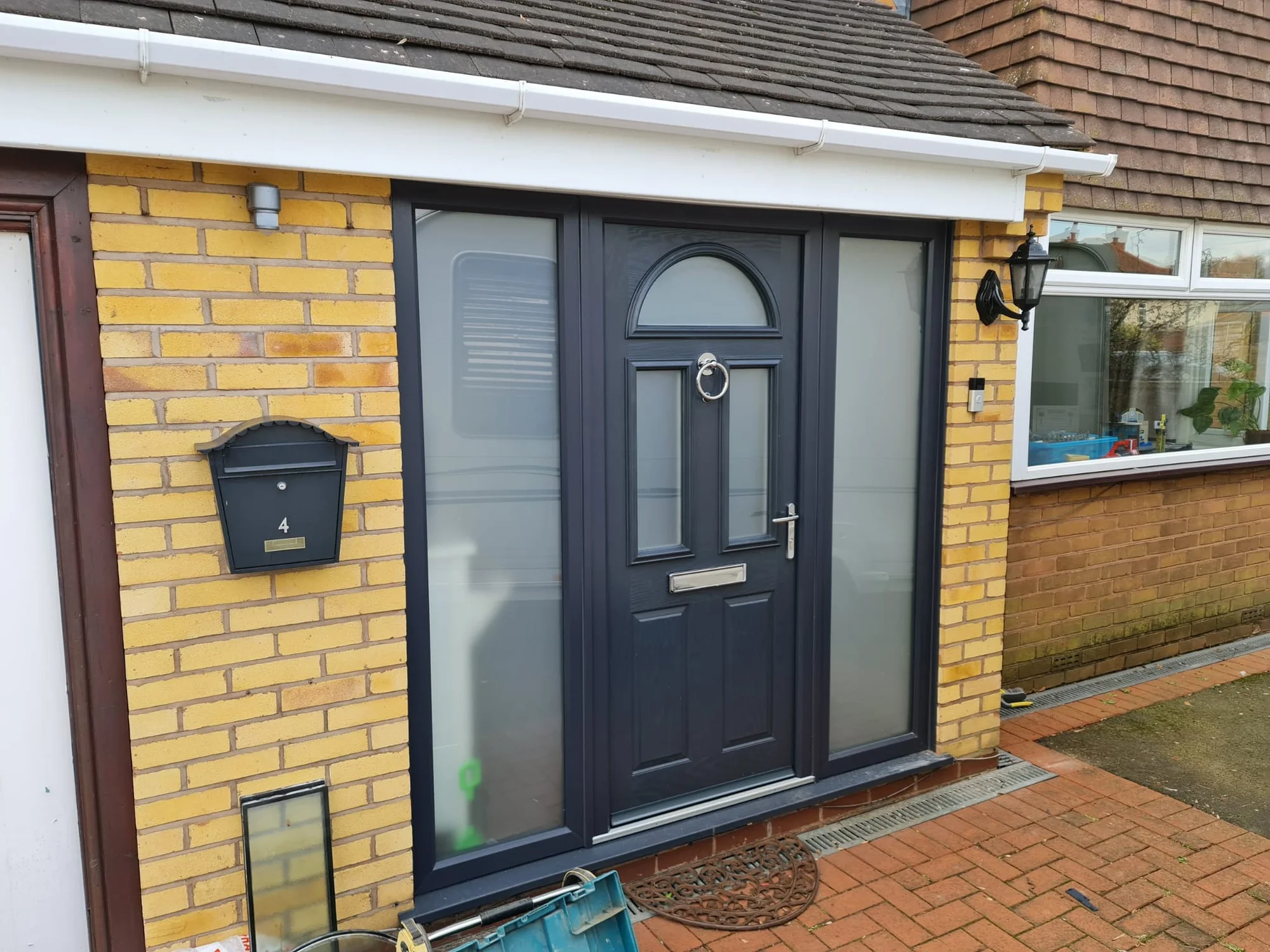
Compare complete door sets, not slabs or brochure images. The frame, panel, glass, locks, hinges, threshold and installation all influence the finished entrance.
At a glance
Composite and uPVC entrance doors compared
| Consideration | Composite door | uPVC door |
|---|---|---|
| Typical construction | A multi-material door leaf, often with an insulated core and durable outer facings. | A reinforced uPVC frame with a glazed or purpose-made door panel, depending on the design. |
| Appearance | Often chosen for a substantial door feel and moulded or grained finishes. | Can coordinate closely with uPVC windows and offers many glazed and panelled styles. |
| Daily care | Generally low maintenance, although finish and hardware care still matter. | Generally straightforward to clean, with hinges, locks and seals needing routine attention. |
| What to compare | The whole door set, glass, hardware, threshold and installation. | The whole door set, reinforcement, glass, hardware, threshold and installation. |
Start with the entire doorway
The moving leaf is only one part of an entrance. The outer frame, side panels, fanlight, threshold, cill, glazing, seals, locks and surrounding wall all affect how the door looks and performs. Comparing one composite slab with one uPVC panel misses much of what you are buying.
Photograph the entrance straight on and from inside. Note the width of brickwork, any arch or porch, the direction the current door swings and where radiators, mats, furniture and switches sit. A carefully proportioned door with simple glazing can suit a narrow opening better than an elaborate design chosen from a full-width brochure image.
How the constructions usually differ
A uPVC entrance door commonly uses a reinforced uPVC outer frame and sash with insulated panels, glass or a combination of the two. It can coordinate closely with uPVC windows and offers considerable flexibility when a large glazed area or particular panel arrangement is wanted.
A composite door uses a leaf made from more than one material within a compatible frame system. The core, skins, edge construction and thickness vary between product ranges. Composite doors often have a substantial solid-leaf appearance, but the word composite does not identify one universal construction or level of performance.
Ask for the named system and information that applies to it. Leaf thickness can be a useful descriptive detail, but it should not be treated as a shortcut for judging security, weather resistance or thermal performance. The whole door set and its installation determine the outcome.
Appearance, colour and proportion
Composite ranges often offer moulded panel styles designed to resemble painted timber doors, from traditional panels with decorative glass to simple contemporary designs. uPVC doors can provide a lighter glazed appearance and may be a natural match when the surrounding windows or porch are also being replaced.
Confirm every colour, not just the leaf colour. The external leaf, internal face, outer frame, glazing surround, cill and side panels may be available in matching or contrasting finishes. Establish whether the sample shows the exact texture and sheen, and view it outdoors because phone screens and indoor lighting can distort colour.
Door furniture changes the character substantially. A long pull bar and offset glazing create a different entrance from a lever handle, knocker and central panel. Make sure the desired furniture is compatible with the locking method and practical for everyone who uses the door.
Balance daylight with privacy
A heavily glazed uPVC door can brighten a dark hall, while a more solid composite design may increase privacy. That does not make the choice absolute. Composite doors can include glazed panels, and either type can be combined with a side light or fanlight where the opening permits.
Consider the view both ways. Patterned or obscure glass provides different levels of screening in daylight and after dark when interior lights are on. If seeing visitors matters, plan a suitable clear area, spyhole or other arrangement. Any safety-glazing requirement should be confirmed for the specific location during survey.
Security comes from the complete door set
Do not assume that every composite door is more secure than every uPVC door. Security depends on the leaf, frame, reinforcement, glass retention, lock, cylinder, hinges and correct installation working together. A premium-looking slab fitted into an unsuitable or poorly secured frame does not provide a meaningful comparison.
Ask what lock and cylinder are included, how the hinge side is protected and what evidence applies to the complete configuration being quoted. Side panels and glazing form part of the entrance too. If the household needs easy exit, child safety or operation without lifting a heavy handle, include that in the discussion before choosing hardware.
- Complete door-set evidence
- Locking points and cylinder
- Hinge-side protection
- Glass and panel retention
- Secure fixing into the opening
- Convenient exit for the household
Thresholds and access need an on-site assessment
A lower threshold may make entry easier for a wheelchair, pushchair or anyone with limited mobility, but the surrounding internal and external levels, drainage and exposure affect what is practical. A brochure photograph cannot show whether rainwater can be managed at your opening.
Measure how the existing threshold is crossed and note any step, slope or mat well. If building work is planned, coordinate finished floor and paving levels with the door survey. Ask the installer to show the proposed threshold and cill section, explain the weathering arrangement and identify any work that falls outside the door installation.
Consider weather, sunlight and daily traffic
A sheltered side entrance used twice a day has different demands from an exposed front door used by a busy household. Tell the surveyor whether wind-driven rain reaches the door, whether strong sun heats a dark external finish and whether children, pets or frequent deliveries influence the layout.
The opening direction affects weather and space. Inward opening is common, but it needs clear internal swing room. Outward opening may require careful consideration of the external landing, approach and exposure. Confirm where the open leaf rests and whether a restrictor or suitable hold-open arrangement is required.
Maintenance and repairability
Both door types need cleaning and occasional attention to seals, drainage and moving hardware. Follow the manufacturer's care information and avoid harsh products that may damage surfaces or gaskets. A stiff lock or door that begins to catch may need adjustment rather than force.
Ask how replaceable items such as sealed glass units, handles, cylinders and weather seals are dealt with. Product ranges can change over time, so keep the exact product name, colour reference, key information and guarantee documents. No material should be described as maintenance free or immune from wear.
Compare costs on the same basis
Composite doors often carry a higher starting price than straightforward uPVC configurations, but style, glass, frame colour, hardware, threshold and side panels can change either total substantially. Decide which features solve a real need and which are decorative preferences before comparing quotations.
Each written proposal should cover the full frame and leaf, glass, furniture, threshold, cill, removal, disposal, perimeter finishing and guarantees. Confirm whether alarm contacts, doorbells, plaster repair, decoration or external building work are excluded. Approve a final drawing that shows handing, opening direction and every visible selection before manufacture.
- Named door and frame system
- Exact colours on every face
- Glass and furniture
- Threshold, cill and access details
- Removal and making good
- Product and installation guarantees
Common questions
Frequently asked questions
Is a composite door always more secure than a uPVC door?
No. The material label alone does not determine security. Compare the complete door set, including the leaf, frame, reinforcement, lock, cylinder, hinges, glass retention and installation. Ask for evidence relevant to the exact configuration offered.
Which type of door needs less maintenance?
Both are generally intended to avoid routine painting, but neither is maintenance free. Frames, drainage and seals need cleaning, while hinges and locking hardware need suitable care and occasional adjustment. The finish and manufacturer's instructions for the chosen system should guide maintenance.
Can either door have a low threshold?
Suitable threshold options may be available for either type, but the best choice depends on the door system, required access, exterior exposure, drainage and surrounding floor levels. The whole entrance should be surveyed before a low-threshold arrangement is confirmed.
Should I choose a door based on its thickness?
Thickness describes one aspect of the leaf but does not prove overall performance. Core material, skins, frame, glass, seals, hardware and installation also matter. The thickest leaf is not automatically best, so compare complete product information and practical features.
Talk it through
Advice is most useful when it is applied to the property
Prime can assess the opening, explain suitable options and provide a written quotation without pressure to make an immediate decision.